Blog
February 09, 2023 By Jake Drown
5 Issues with Closed Captioning Your Own Videos

Close captioning is a great way to make videos more accessible to viewers who are hard of hearing or deaf. Unfortunately, it can often be tricky to implement with your own videos, and there are plenty of issues that you may encounter. This article will discuss 5 of the most common issues associated with close captioning your own videos, so you can be better prepared for the task.
Issue 1: Finding the Time to Do It
Close captioning is a very time-consuming process and it is often difficult to find time to do it in your own schedule. Not only does it take time to actually add the captions, but you also have to watch the video while creating the captions, which can take significantly longer than the actual captioning. It’s a good idea to break the video down into smaller parts, so you can work on it in more manageable chunks, but it still takes a lot of time to get the job done.
CONTINUE READINGJuly 17, 2019 By David Appelt
The Power of Video Content on Social Media
The Streaming Revolution has made it possible, among other things, for the average person to spend roughly 38 hours per week watching video content (40% of which is streamed, often on mobile devices). Forty-four percent of people watch more than 5 videos per day (Source: Deloitte). Almost half of the...
CONTINUE READINGApril 24, 2019 By David Appelt
The Universality of Digital Video and the Need for Closed Captions
The world where your content is competing is a world where closed captions and subtitles are necessary, if not more necessary than ever—according to multiple digital media usage studies.
CONTINUE READINGApril 27, 2017 By Ben Kalb
The FCC Cracks Down on Quality Standards
Discount companies are using shortcuts and claim high accuracy at low costs, which sounds pretty good, right? But the FCC isn’t looking for “pretty good”—it’s mandating perfection.
CONTINUE READINGJanuary 07, 2016 By Robin Walters
Attention Marketing: Closed Captioning Increases SEO

There’s been some debate lately about whether search engine optimization (SEO) is dead. It’s true that millennials are splitting their searches between the traditional Google and a host of other topic-specific sites that share consumer ratings of products and services. These days, millennials want to know what their friends think about a service before buying.
CONTINUE READINGOctober 23, 2015 By Jake Drown
The Dangers of Poorly Captioned Broadcasts
The FCC averages around 500 closed captioning quality complaints per year. Imagine the level of frustration felt by the hearing impaired person that actually takes the time to register a complaint.
When you consider that the majority of Americans can’t seem to find the time to vote – the fact that someone would take the time to complain to a government agency shows the level of angst they must be feeling.
CONTINUE READINGOctober 08, 2015 By Ryan Hawthorne
Fishers of Men: The Importance of Quality Closed Captioning in Ministry Broadcasts

A pure gold brick wrapped in an ugly package.
If you’re a ministry organization, and you’re settling for poor quality closed captioning, that’s exactly what you’re offering to deaf and hard of hearing parishioners.
CONTINUE READINGOctober 07, 2015 By Ben Kalb
Reaching Your Target Audience – Why Closed Captioning is Important
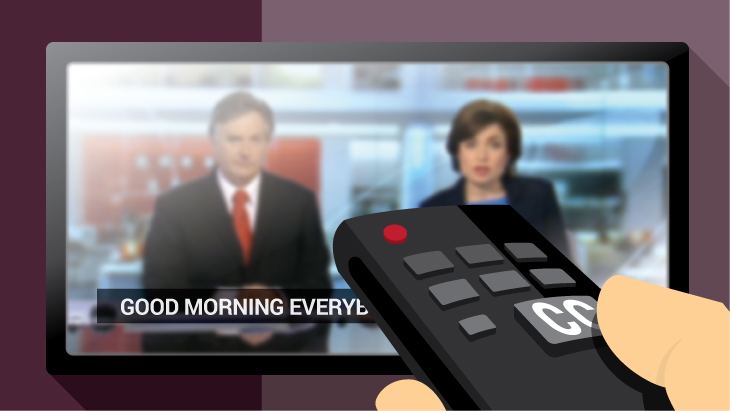
The accuracy of closed captioning is important. It affects nearly 40 million Americans who are hard of hearing or functionally deaf.
Next time you’re at the gym watching the TV scroll closed captioning, notice how many times “there” should be “their.” What about homophones like carat, caret and carrot? We’ve all seen the viral videos of closed captioning gone wrong, but if you’re deaf or hard of hearing, it’s not very amusing at all.
CONTINUE READINGJanuary 18, 2017 By Derek Nicol
The First Deaf Hero in Closed Captioning History

If closed captioning could salute its pioneer, Emerson Romero would be the man. He was a Charlie Chaplain impersonator, an actor for silent movies, and the first to champion accessible media. The best part—he was deaf.
CONTINUE READINGJanuary 18, 2017 By Ryan Hawthorne
FCC Captioning Quality Improvements
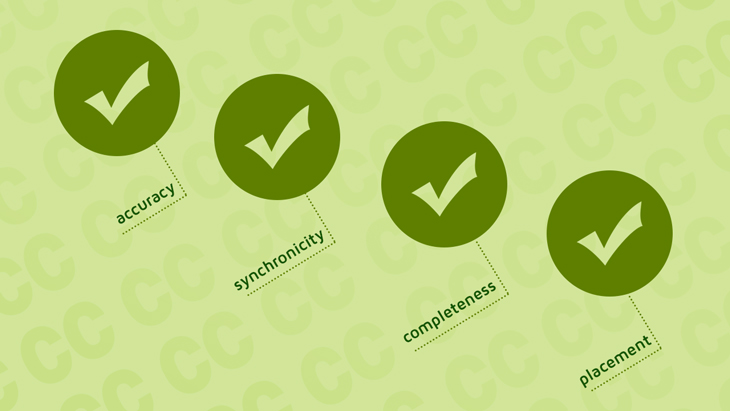
The FCC unanimously voted to adopt new standards for closed captioning on television programming. The new rules are meant to ensure the best efforts of video programming distributors to improve closed captioning quality. The new standards focus on quality improvement to post-produced closed captioning in four specific areas: accuracy, synchronicity, completeness and placement.
CONTINUE READING